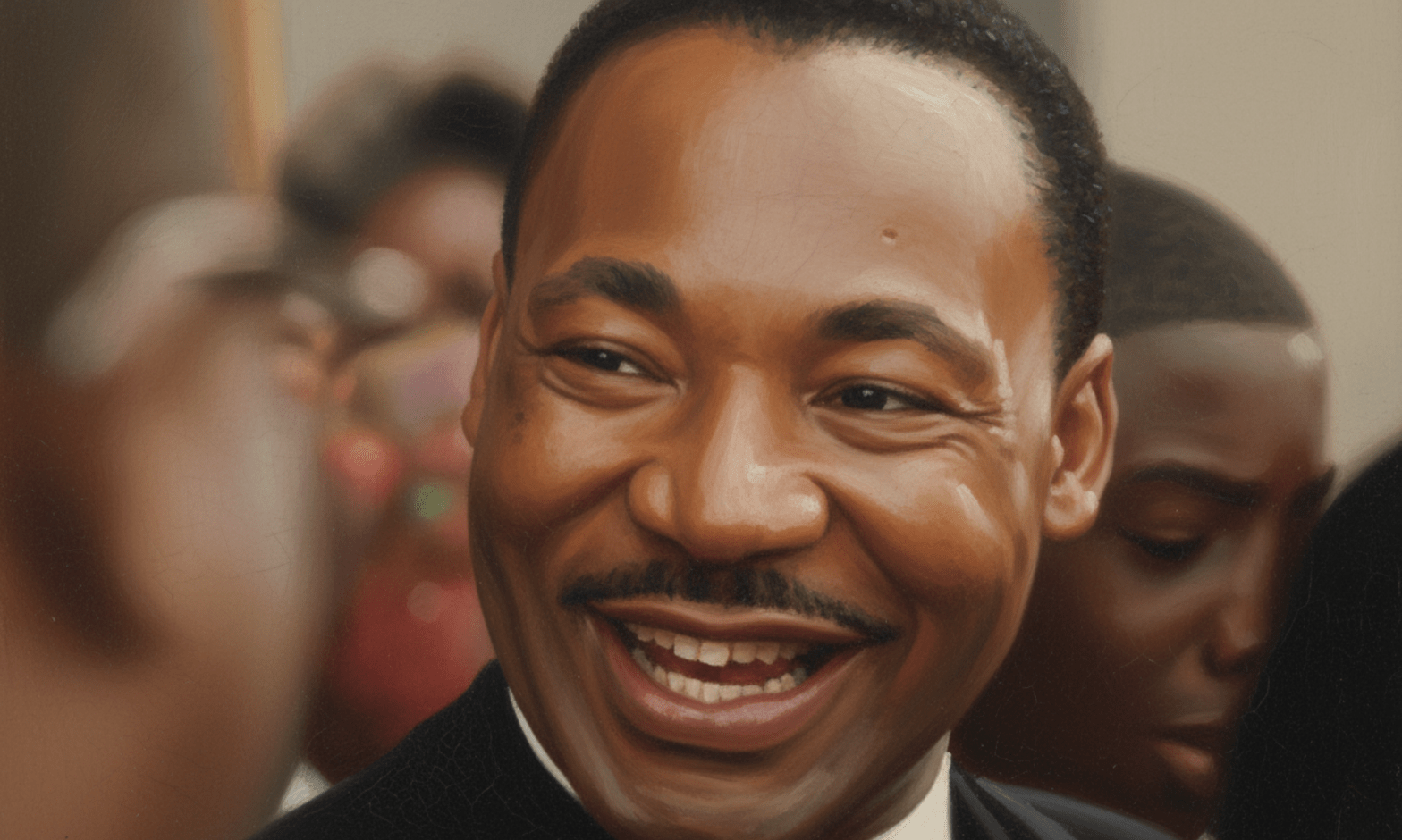
Dr Martin Luther King Jr was born on the 15th of January 1929. He had a degree in sociology and theology. As the Blackwell Encyclopaedia of Sociology notes, King remains “a public sociologist par excellence.” In celebration of the passing birthday of this pre-eminent sociologist and civil rights activist, we revist a quote by King. He argues education is not simply about accumulating knowledge, but rather to develop a sense of morality based upon principles of social justice and then acting upon these values.
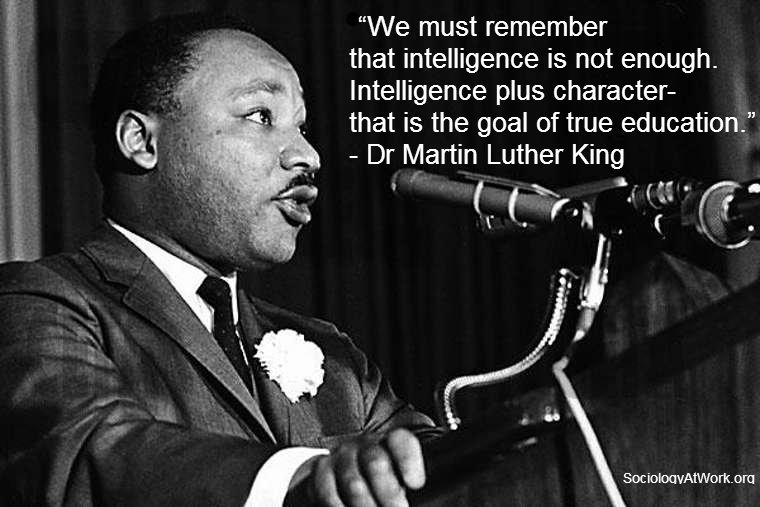
Theologian Alton Pollard notes that towards the end of King’s career, King focused on broader patterns of poverty and racial oppression. King is cited as calling for a broad scale social transformation:
‘For years I laboured with the idea of reforming the existing institutions of the society, a little change here, a little change there. Now I feel quite differently. I think you’ve got to have a reconstruction of the entire society, a revolution of values.’
Luther’s sociological training influenced his “change management” leadership style, which David Frantz describes as:
‘building a vision, networking, communicating powerfully, identifying and dealing with differences, creating leverage to motivate people, and conceptualizing alternative strategic paths.’ (p.157)
Margarita Moonie recently posted about “positive sociology,” which seeks to reorient our discipline’s focus from social inequalities to “human flourishing and the common good.” We should not stop focusing on social inequality, however, we can better emphasise sociology’s role in positive social transformation. Here I see a link to King’s life’s work, as well as other public sociologists.
In 2003, Professor Stephen Crook argued that sociology students need to hear better stories about the applicability of their degrees to tangible social problems. He writes:
‘As someone remarked, in a phrase that has stuck in my mind, `We need to tell them better stories.’ Perhaps, sometimes, we do need to tell them–our students–better stories. A diet of unrelieved gloom focused on the evils of class, patriarchy and racism, or the threats posed by environmental crisis and the global economy has a strong appeal to me but not, I think, to most 18-year-old North Queenslanders. Perhaps we need to tell them stories about the skills they can acquire to help them make what they want of their lives, or about the ways their communities can be strengthened, or the types of transnational institutions that might promote ecological sustainability.’ [My emphasis]
This means moving beyond the “merciless critique” of social problems to also focusing on the practical ways in which inequalities can be addressed.
Public sociology and positive social transformation happen through the dedicated efforts of applied sociologists and other activists who work on little projects in local neighbourhoods, as well as on large scale social movements.
If you’re still studying sociology and you wonder what you can do with a sociology degree, think about King as a model for what applied sociologists can achieve outside academia.
You don’t have to transform society in major ways, as King did with the civil rights movement in America. You can transform society through applying your knowledge and social justice principles in your daily actions. For example, through your work with local communities, in government departments, in not-for-profit organisations and in industry.
We can’t all be Martin Luther King, but we can certainly model our behaviour on his leadership and draw inspiration from his application of sociological principles.
Discover more from Sociology at Work
Subscribe to get the latest posts sent to your email.
 Sociology at Work