
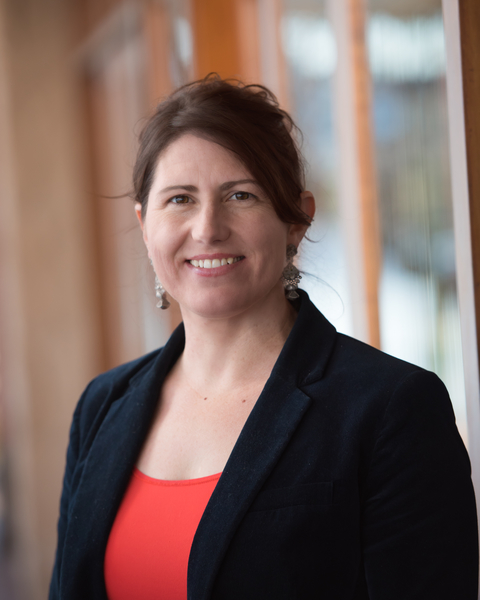
This week, we feature a Q&A with Dr Samantha Crompvoets, an applied sociologist with an impactful career in health, defence, security, human rights, and beyond. For over 20 years, she has worked as a consultant on workplace climate and organisational change. She tells us about how she uses sociology to implement policy changes, and in delivering consultancy projects.
Introduction
Dr Crompvoets’ early research examined women’s lived experience of breast cancer and surgical breast reconstruction. In 2015, Dr Crompvoets conducted a cultural review of Special Operations Command, for the Australian Defence Force. Her findings on military misconduct subsequently informed the Brereton Report, which found credible evidence of war crimes committed by Australian Special Forces in Afghanistan.
Dr Crompvoets’ book Blood Lust, Trust & Blame details how her research approach differs from the Brereton Report. The latter focused on military ‘culture,’ while her analysis used a framework of social networks and organisational climate to analyse how military misconduct spreads.
Her work remains relevant, given ongoing issues in the Armed Forces. This includes the 60 Minutes investigation into Defence failures to address sexual violence against women in the Armed Forces, which aired in July 2025, and the recently delivered Royal Commission into Defence and Veteran Suicide, which exposes resistance to institutional change.
Q&A
Your PhD traced the connection between ‘the microparticulars’ of breast reconstruction and ‘macrocultural structures.’ How did you first become interested in medical sociology?
Ironically, I became interested via the discipline of History and Philosophy of Science as an undergraduate, where I learnt about the social construction of health and illness.
Your early career began with research projects for external clients, which you initially conducted in a university context. What influenced your decision to leave academia?
I had always wanted to do applied research, and being able to do that and put the findings directly in the hands of a decision maker, was far more rewarding than negotiating with article reviewers for years. The university model was quite restrictive and unable to accommodate research at a pace that matched Government, or other clients, needs.
You conducted a three-year research project on the health needs of women in the military, for the Department of Veterans Affairs (DVA). How did your sociological training help you deliver this work? Can you share a little about the policy impact of your findings?
It helped in the way I could quickly develop a framework for understanding what was happening for the women in the study, looking at difference levels of influences, who or what had agency, and who and what didn’t.
The findings changed the way the Department of Veteran’s Affairs viewed female veterans. It highlighted that veteran wasn’t a gender-neutral term and that this was a tangible barrier for women accessing services. Significantly, it shaped the DVA’s internal workings, aligning the research and policy divisions for the first time.

You specialise in research and implementation. Can you talk about this distinction, and give us some examples of your consultancy projects?
We all know what research is. Implementation however is that next step – you’ve collated evidence, made recommendations, and submitted the final report – now you have to get your hands dirty. Implementing changes that you’ve recommended means being there to watch it happen; to measure its impact and be accountable for the success or failure of the plan.
Examples of consultancy projects I’ve done include reviewing the Australian National University’s sexual assault and harassment policies and procedures, drafting the Australian Football League’s respect and responsibility policy, helping various Emergency Services increase the numbers of women in their ranks, mining companies implement flexible work practices, teaching gender-sensitive research methods to international militaries, to name a few.
Your book Blood Lust, Trust & Blame is a compact and compelling read. You argue that the typical approach to misconduct is to focus on ‘culture,’ but this can muddy understandings of organisational problems, and obscure accountability. How did sociology help you establish this critique of such cultural approaches?
Sociology helps tell it how it is. It provides a language and theoretical framework to unpack complex concepts, like culture. The trick is to not let that language leak in to writing for an applied audience, it will obstruct the impact of your work.
What was involved in your role with NATO SAS-144 panel, which developed the Code of Best Practice for Conducting Survey Research in a Military Context?
The NATO panel involved over four years of meetings with a group of international experts on military research. Together, we developed a comprehensive guidebook on dos and don’ts and best practice, based on us all sharing what each of our country’s did and what worked and what didn’t. It was a privilege to be a part of.
How do you fuel and recharge your sociological imagination as a practitioner?
Reading narrative non-fiction that has a sociological bent always triggers my thinking in different directions.

Do you have any practical advice for sociology students and recent graduates who want to pursue a career in medical sociology and consultancy?
Start translating your sociological know-how into tangible skill sets that mean something beyond the university setting. I never realised the value of being a sociologist until I had left academia, and I found that the skills I had taken for granted were actually highly sought after. Writing for clients – government, private companies, NGOs – requires a real shift in style too, and that can be really challenging and disheartening at first. It takes practice.
Finally, where can we keep up with your research and activities?
I don’t have social media beyond a dormant twitter account. I’m currently working on a new book, a cautionary tale about telling truth to power, that will hopefully hit the shelves next year.
Thank you for your time, expertise, and extraordinary sociological contribution to justice and policy reform!
Discover more from Sociology at Work
Subscribe to get the latest posts sent to your email.
 Sociology at Work